The Four DORA Metrics That Define Modern Software Delivery

Introduction: Why Measuring Software Delivery Is Hard
For decades, the software engineering industry has grappled with a persistent and often frustrating challenge: how do you accurately measure productivity and effectiveness in a domain built on creativity, problem-solving, and constant evolution? Historically, attempts to quantify engineering output have often fallen short, leading to misguided strategies and unmet expectations.
We have seen countless organizations cling to traditional metrics that, while seemingly logical, ultimately fail to paint a complete or accurate picture. Metrics like "lines of code written" are easily gamed and bear little correlation to actual value delivered. "Developer utilization rates" often encourage busyness over impact, fostering a culture where looking busy is prioritized over shipping high-quality software. Even "story points velocity," a staple of agile methodologies, can become an internal-facing measure that, when weaponized, drives teams to inflate estimates or sacrifice quality for perceived speed, rather than focusing on the actual outcomes for users and the business.
The fundamental flaw in these traditional approaches is their focus on activity or output rather than outcomes. Within the complex, adaptive nature of software delivery, simply tracking what engineers do does not tell you if what they are doing is actually effective, valuable, or sustainable. We need a shift in perspective, moving from internal process metrics to external, outcome-oriented delivery metrics that reflect the health and performance of the entire software delivery system.
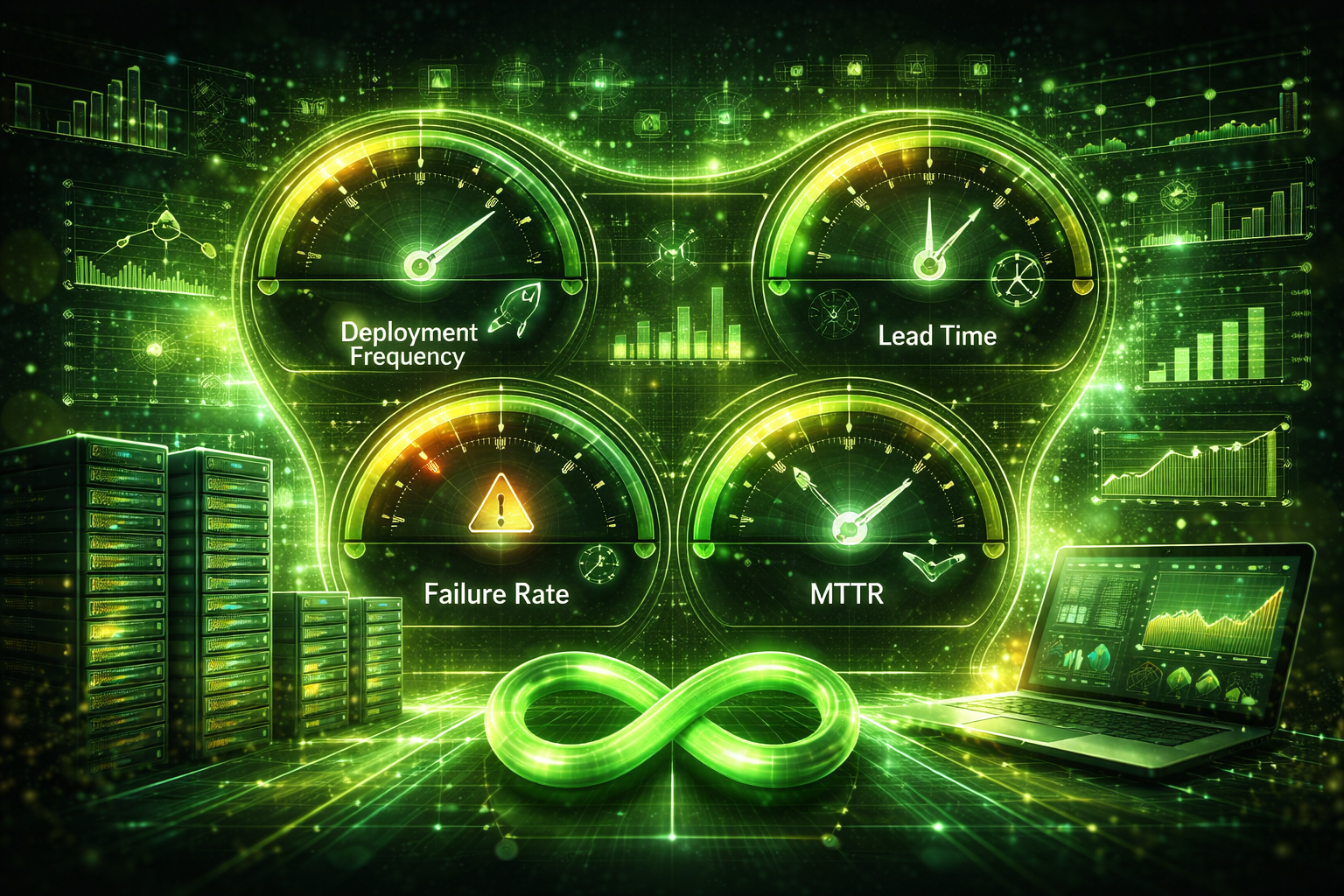
This is where DORA enters the conversation. The DevOps Research and Assessment (DORA) group has revolutionized how we think about software delivery performance, providing a robust, research-backed framework that has fundamentally reshaped industry discourse. This article will delve into the four core DORA metrics, explaining what they measure, why they matter, and how they work in concert to define modern software delivery success. We will explore their power to foster better conversations, drive meaningful improvements, and align engineering efforts with business objectives.
What this article will not cover are the intricacies of setting up DORA metric collection tools, nor will it prescribe specific technical solutions. Our focus is on the foundational understanding and strategic application of the metrics themselves.